

Most kids — at some point — will dig their heels in and refuse. A new food, a new sport, a new school year, a new friend group. The resistance can look like stubbornness. It can sound like “I can’t.” But underneath it, something else is happening — and once you understand it, the whole dynamic changes.
Why New Things Feel Threatening to Kids
Children’s brains are wired for pattern recognition and prediction. The familiar is safe. The unfamiliar is, by definition, unpredictable — and unpredictable things activate the brain’s alarm system, the amygdala, before the thinking brain even has a chance to weigh in.
According to research on child development and self-regulation, young children lack the executive function skills to manage the discomfort of uncertainty on their own. They need a trusted adult to help them tolerate the gap between “I don’t know what will happen” and “I can handle whatever happens.”
That gap — and how adults respond to it — is where the growth mindset either takes root or doesn’t.

What a Growth Mindset Actually Looks Like in Children
The term “growth mindset” — coined by psychologist Carol Dweck — describes the belief that abilities are developed through effort and experience, not fixed at birth. In children, a growth mindset sounds like:
- “I can’t do this yet.”
- “What happens if I try?”
- “It’s okay if I’m not good at this right away.”
But growth mindset isn’t a phrase you teach a child to say. It’s a posture toward difficulty that develops over time, through repeated experience of trying, struggling, and surviving. Children who feel safe enough to fail — who have adults around them who respond to failure with warmth instead of disappointment — are the ones who develop it most naturally.
The key word is safe. Growth mindset is downstream of felt safety.
What Doesn’t Help (Even When It’s Well-Intentioned)
When a child refuses to try something new, most adults default to one of a few responses:
Pushing harder. “Just try it. You’ll like it. Stop being dramatic.” This communicates that the child’s discomfort isn’t real or valid — which makes the nervous system dig in harder, not soften.
Removing the challenge entirely. “Okay, you don’t have to do it.” This provides short-term relief but teaches the child that discomfort is a signal to retreat, not to tolerate.
Praising talent. “You’re so smart, you’ll be great at it.” Dweck’s research is clear on this one: praising talent makes children more risk-averse, not less. If their identity is built on being smart, failing threatens who they are. Praising effort instead — “I love how hard you try” — separates their worth from their performance.
What works is something in between: acknowledging the discomfort while holding the expectation gently.
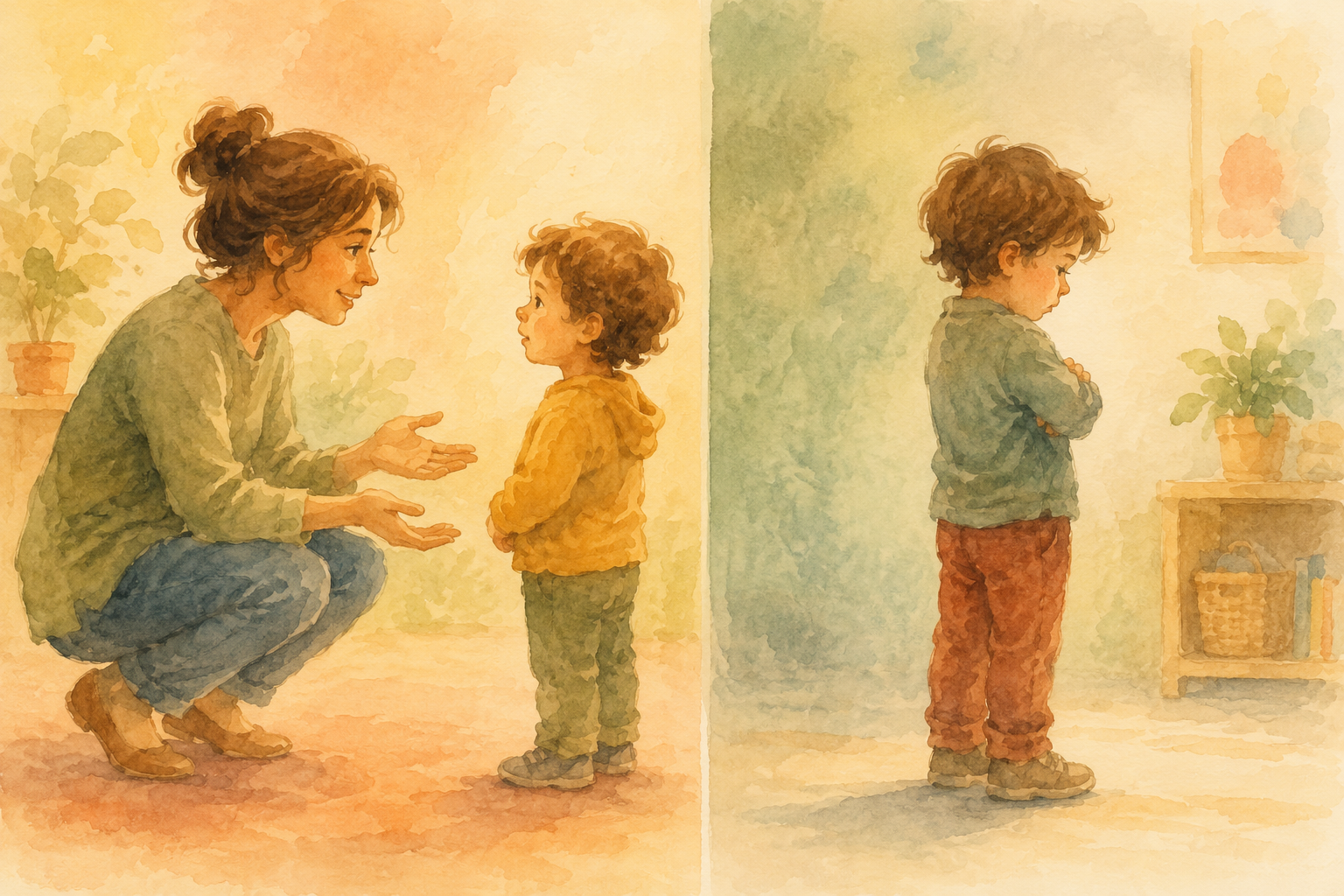
What to Say When Your Child Won’t Try
These phrases support a growth mindset without dismissing what your child is feeling:
When they say “I can’t do it”:
“You can’t do it yet. That’s different from can’t.”
When they refuse before even trying:
“You don’t have to be good at it. You just have to try once.”
When they try and fail and want to quit:
“That didn’t work this time. What do you think you could try differently?”
When they’re overwhelmed by how hard something feels:
“Hard things feel hard at first. That’s what hard means. It doesn’t mean impossible.”
When they compare themselves to other kids:
“You’re not practicing to be better than them. You’re practicing to be better than yesterday-you.”
None of these phrases require children to feel good about trying. They just keep the door open.
The Role of Small Steps
One of the most powerful reframes for children — and adults — is the idea that bravery doesn’t require a leap. It only ever requires one small step.
Children who learn to break hard things into smaller pieces develop a skill that serves them across every domain of life: relationships, school, sports, creative work, and eventually, careers and parenting. The child who learns at seven that they can do hard things in small increments is the adult who doesn’t quit when things get uncomfortable.
That’s not a small thing. That’s everything.

A Song That Helps
One of the most natural ways to introduce growth mindset concepts to young children is through music. Songs give children a way to carry ideas with them — in the car, at bedtime, during transitions — without it feeling like a lesson.
Try Something New is a free song for kids that gently introduces the idea of brave trying: that new things feel hard, that it’s okay not to be perfect, and that every time you try, something in you grows.
You can also listen on Spotify and all major streaming platforms.

For Clinicians and Educators
If you work with children, growth mindset concepts pair naturally with several evidence-based frameworks — including the cognitive coping component of Trauma-Focused Cognitive Behavioral Therapy (TF-CBT), which helps children identify unhelpful thoughts (“I can’t do this”) and practice more balanced alternatives (“I haven’t tried this yet”).
Children with trauma histories are often especially resistant to new experiences, because their nervous systems have learned to treat the unfamiliar as dangerous. Growth mindset work with these children needs to be paced carefully — starting with safety, co-regulation, and trust before introducing challenge.
Free clinical resources for working with children on coping skills, emotional regulation, and resilience are available at skillsforchildren.com/tfcbt.
Joshua Fisherkeller, MSW, is the creator of Skills for Children — a free resource hub offering evidence-informed songs, books, and tools for children, caregivers, educators, and mental health professionals.